What Is Manufacturing ERP? A Complete Beginner’s Guide (2026)
Manufacturing companies operate in a highly competitive environment where efficiency, cost control, production planning, and inventory accuracy determine long-term success. As businesses grow, managing these operations using spreadsheets or disconnected software becomes increasingly difficult.
This is where Manufacturing ERP (Enterprise Resource Planning) becomes essential. An ERP system integrates every core business process into one centralized platform, allowing manufacturers to make faster decisions, reduce operational costs, and improve overall productivity.
Whether you operate a small factory or a global manufacturing enterprise, understanding how ERP works is critical before investing in any software solution.
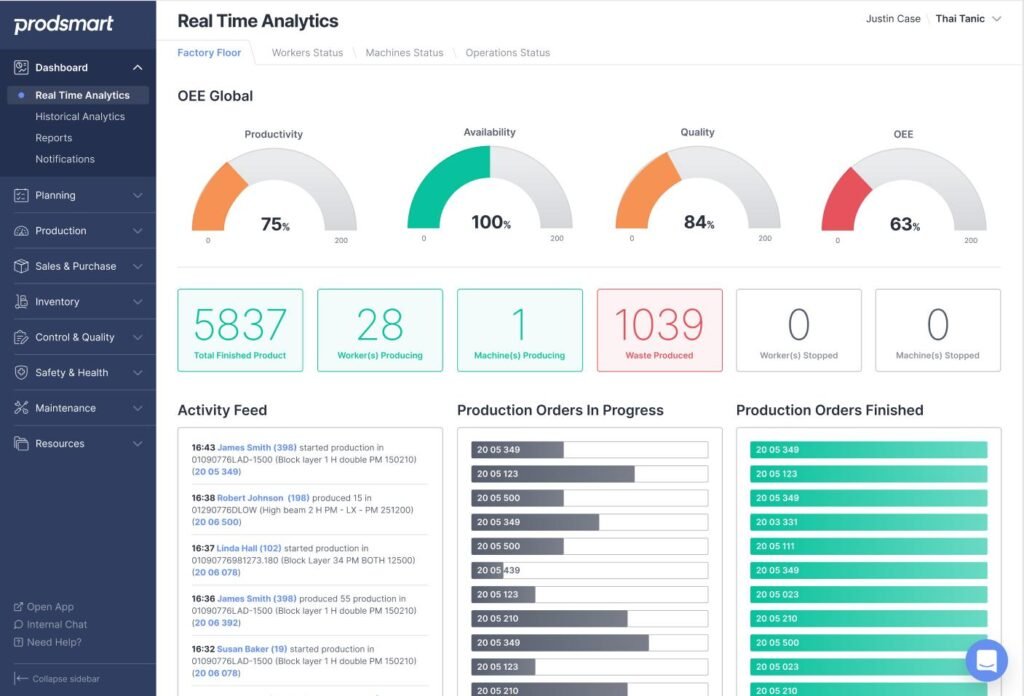
Table of Contents
- What Is Manufacturing ERP?
- How Manufacturing ERP Works
- Main ERP Modules
- Benefits of Manufacturing ERP
- Cloud ERP vs On-Premise ERP
- ERP Implementation Process
- Common Challenges
- Frequently Asked Questions
- Conclusion
What Is Manufacturing ERP?
Manufacturing ERP is software specifically designed to help manufacturers manage every aspect of their business from a single integrated system. Instead of using separate applications for accounting, inventory, purchasing, production planning, warehouse management, sales, and quality control, ERP combines everything into one centralized database.
This integration allows departments to share the same real-time information. When inventory changes, production schedules update automatically. When sales receive a new order, purchasing can immediately identify material shortages while finance tracks costs without duplicate data entry.
In simple terms, Manufacturing ERP becomes the digital backbone of an entire factory.
Why Manufacturers Need ERP Software
Modern manufacturing involves thousands of daily transactions.
- Purchase Orders
- Sales Orders
- Inventory Movements
- Production Scheduling
- Machine Utilization
- Supplier Management
- Quality Inspections
- Financial Reporting
Managing these activities manually often results in delayed production, inaccurate inventory counts, duplicate data, and poor decision-making.
ERP software eliminates many of these issues by ensuring every department works with the same real-time information.

How Manufacturing ERP Works
Imagine a customer places an order for 500 products.
Without ERP, multiple departments may manually exchange spreadsheets, emails, and paperwork.
With ERP, the workflow becomes automated:
- Sales enters the order.
- Inventory checks available stock.
- Production Planning creates manufacturing schedules.
- Purchasing orders missing materials.
- Warehouse prepares inventory.
- Finance records transactions automatically.
- Management monitors progress through dashboards.
This significantly reduces manual work while improving operational accuracy.
Main Manufacturing ERP Modules
| Module | Purpose |
|---|---|
| Inventory Management | Track stock levels and material movement. |
| Production Planning | Schedule manufacturing operations. |
| Procurement | Manage supplier purchasing. |
| Warehouse Management | Optimize storage and picking. |
| Accounting | Financial reporting and costing. |
| Sales Management | Manage quotations and customer orders. |
| Quality Management | Monitor inspections and compliance. |
| Maintenance | Schedule preventive equipment maintenance. |
Key Benefits of Manufacturing ERP
1. Better Inventory Accuracy
Manufacturers gain real-time visibility into raw materials, work-in-progress inventory, and finished goods.
2. Improved Production Planning
Production schedules become more accurate because ERP considers inventory, customer demand, machine capacity, and supplier lead times.
3. Lower Operating Costs
Automation reduces manual work while minimizing inventory waste, duplicate purchases, and production delays.
4. Faster Business Decisions
Executives gain access to dashboards showing production performance, inventory turnover, profitability, and customer demand.
