
In modern American politics, few figures have reshaped the dynamics between political leadership and the press corps as dramatically as Donald Trump[cite: 8]. Whether on tarmac press gaggles under stadium floodlights, impromptu hallway pressers, or late-night press encounters outside campaign rallies, his approach to media communication bypasses traditional press room decorum in favor of direct, high-energy engagement[cite: 8].
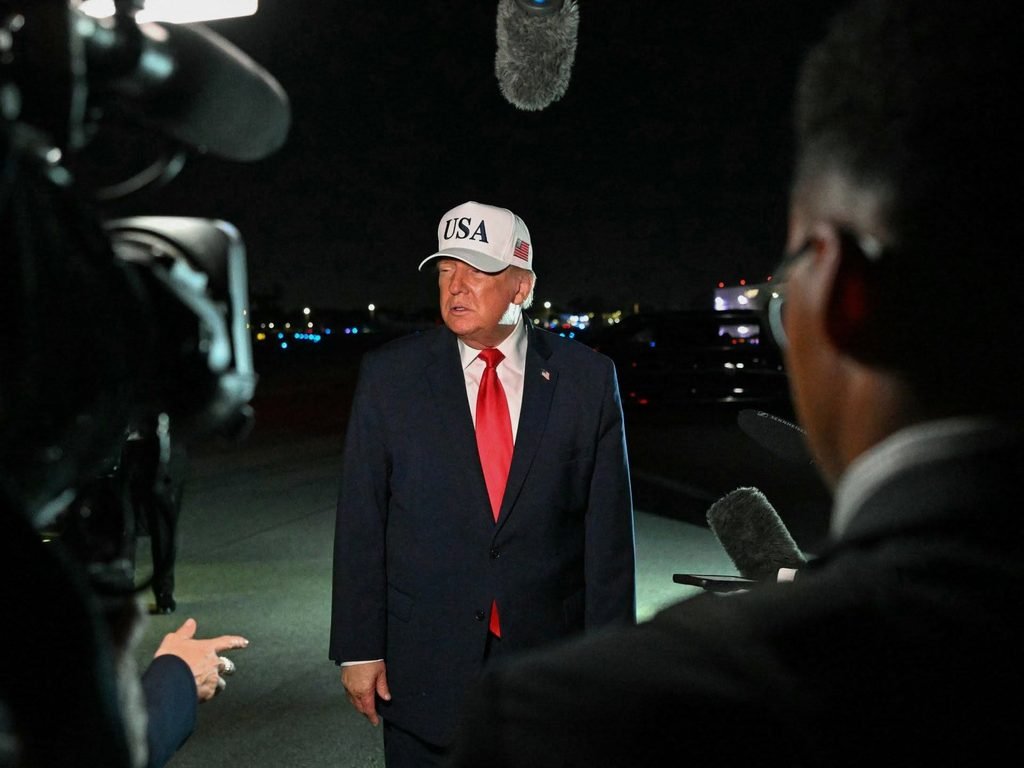
Images of Trump standing before a cluster of boom mics and flashbulbs late at night have become iconic symbols of modern political warfare[cite: 8]. This long-form political analysis explores the mechanics of Donald Trump’s press strategy, the evolution of late-night political communications, media ecosystem interactions, and the strategic rationale behind unscripted press availability[cite: 8].
Donald Trump fields impromptu questions from press corps reporters late at night[cite: 8].
The Anatomy of the Late-Night Tarmac Press Gaggle
The “press gaggle”—an informal gathering of journalists Donald Trump press strategy surrounding a political leader without formal podiums or structured questioning rules—has existed in Washington for decades. However, the use of late-night gaggles on airport tarmacs and outdoor venues represents a unique evolution in political public relations.
Unlike formal White House Briefing Room events, late-night press gaggles offer distinct operational advantages for political messaging:
- Unfiltered Energy: The raw, ambient background noise of Donald Trump press strategy jet engines or crowd chatter reinforces an image of tireless work ethic and active movement[cite: 8].
- Direct Narrative Control: Taking questions late at night allows a political leader to set the morning news agenda before newsrooms finalize their breakfast broadcast rundowns.
- Combative Accessibility: By frequently stepping in front of cameras, leaders counter accusations of hiding from press scrutiny while maintaining control over conversation length.
To understand official guidelines governing presidential press engagements, review the historical archives compiled by the Official White House Administration Standards.
Strategic Objectives Behind Unscripted Media Engagements
Political communications strategists point out that unscripted media sessions serve multiple strategic objectives simultaneously. While traditional politicians favor heavily rehearsed soundbites and structured press releases, modern populist strategies prioritize volume, speed, and confrontation.
1. Bypassing Media Filters
By providing raw, unedited video clips directly to network feeds and digital streaming channels, political teams ensure their unedited remarks circulate rapidly across social media platforms like X, TikTok, and YouTube long before mainstream newsrooms publish analytical commentary.
2. Setting the News Cycle Pace
In a 24-hour news cycle, speed is political currency. Delivering breaking statements or responding to opponents late at night forces news channels to carry live coverage, effectively capturing prime-time commentary windows.
3. Cultivating Authenticity
Voters across modern democracies increasingly express skepticism toward Donald Trump press strategy hyper-polished political speeches. Wearing signature campaign apparel—such as the iconic white “USA” cap—and taking rapid-fire questions from journalists projects an image of approachable confidence and transparency[cite: 8].
Comparative Analysis: Formal Press Conferences vs. Informal Gaggles
The structural shift from formal podium addresses to informal field pressers reflects broader changes in public media consumption patterns. The table below outlines key operational differences:
| Dimension | Formal Press Conference | Informal Tarmac / Field Gaggle |
|---|---|---|
| Setting & Ambience | Indoor briefing rooms, structured podiums, teleprompters. | Outdoor tarmacs, field venues, handheld microphones[cite: 8]. |
| Questioning Format | Pre-selected call lists, formal turn-taking by major outlets. | Rapid-fire shoutouts, cross-talk, dynamic pacing. |
| Public Perception | Institutional, policy-focused, carefully managed. | Urgent, transparent, authentic, combative. |
| Media Distribution | Full broadcast transmission with post-press analysis. | Bite-sized social media clips, viral short-form video. |
The Role of Imagery and Visual Branding
Visual branding plays a critical role in high-stakes political communication. Every Donald Trump press strategy aesthetic detail in a late-night press engagement—from wardrobe selection to lighting—communicates deliberate messages to target audiences[cite: 8].
For example, pairing formal business attire (a dark suit and red tie) with informal headwear (a white “USA” cap) visually bridges the gap between executive authority and populist movement leadership[cite: 8]. High-contrast directional lighting against dark backgrounds isolates the speaker, focusing viewer attention strictly on expressions, posture, and verbal delivery[cite: 8].
For comprehensive research on press freedoms and political reporting guidelines, consult the standards maintained by the Reporters Committee for Freedom of the Press.
Impact on Modern Media Ecosystems and Journalism
The rise of hyper-frequent, unscripted press access has fundamentally altered daily newsroom Donald Trump press strategy workflows. Journalists traveling on press planes must remain on perpetual standby for sudden, impromptu Q&A sessions[cite: 8].
- Accelerated News Production: Reporters must draft, edit, and publish stories in Donald Trump press strategy real time from mobile devices right on the tarmac.
- Increased Focus on Personalities: Informal exchanges often highlight personal dynamic and verbal clashes over technical policy details.
- Democratization of Content: Live smartphone streams allow local reporters and independent commentators to compete directly with global television networks for audience reach.
“Unscripted press availability forces media outlets to react continuously to the politician’s agenda rather than driving the narrative through traditional investigative schedules.”
Frequently Asked Questions
What is a press gaggle in political reporting?
A press gaggle is an informal, unscripted Q&A session where a group of journalists gathers Donald Trump press strategy around a public figure—often outdoors or near transit hubs—without formal podiums or structured seating.
Why do political candidates conduct late-night media interviews?
Late-night press sessions allow political teams to address breaking developments immediately, shape morning news headlines, and project a image of relentless dedication to campaign goals.
How does visual branding impact press conference messaging?
Visual elements like dark suits combined with branded caps signal a balance of presidential Donald Trump press strategy authority Donald Trump press strategy and movement populism, appealing directly to key voter demographics[cite: 8].
Conclusion
The late-night press gaggle represents far more than an informal chat with journalists[cite: 8]. It is a highly sDonald Trump press strategy trategic political tool designed to control news cycles, demonstrate transparency, and bypass traditional media filters[cite: 8]. As political communications continue to evolve in an era dominated by instant digital content, the high-energy, unscripted press encounter will remain a cornerstone of modern campaign doctrine[cite: 8].
